Abode
Deliverables
- Competitive analysis
- Survey
- Problem statement
- Design principles
- Personas
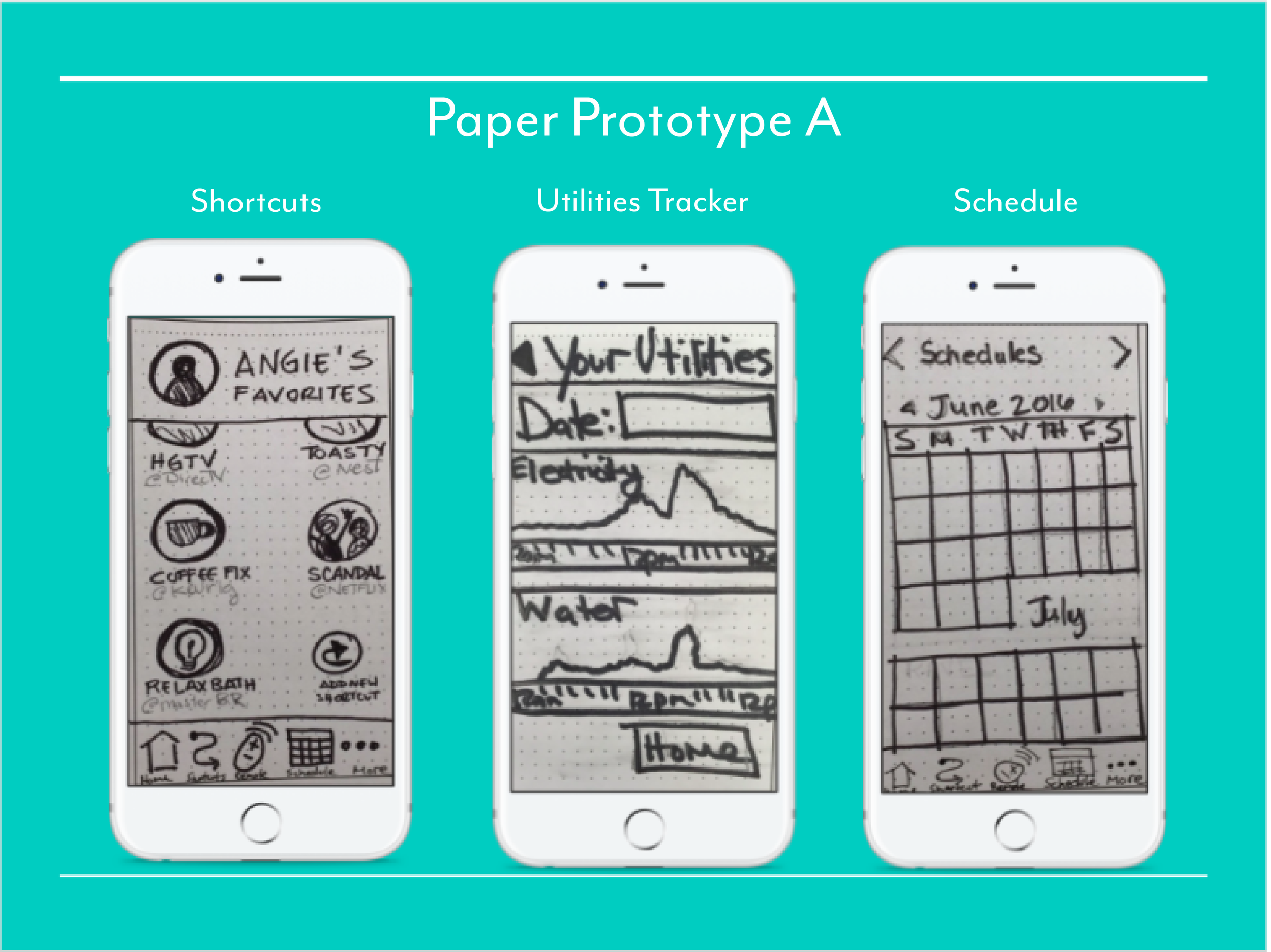
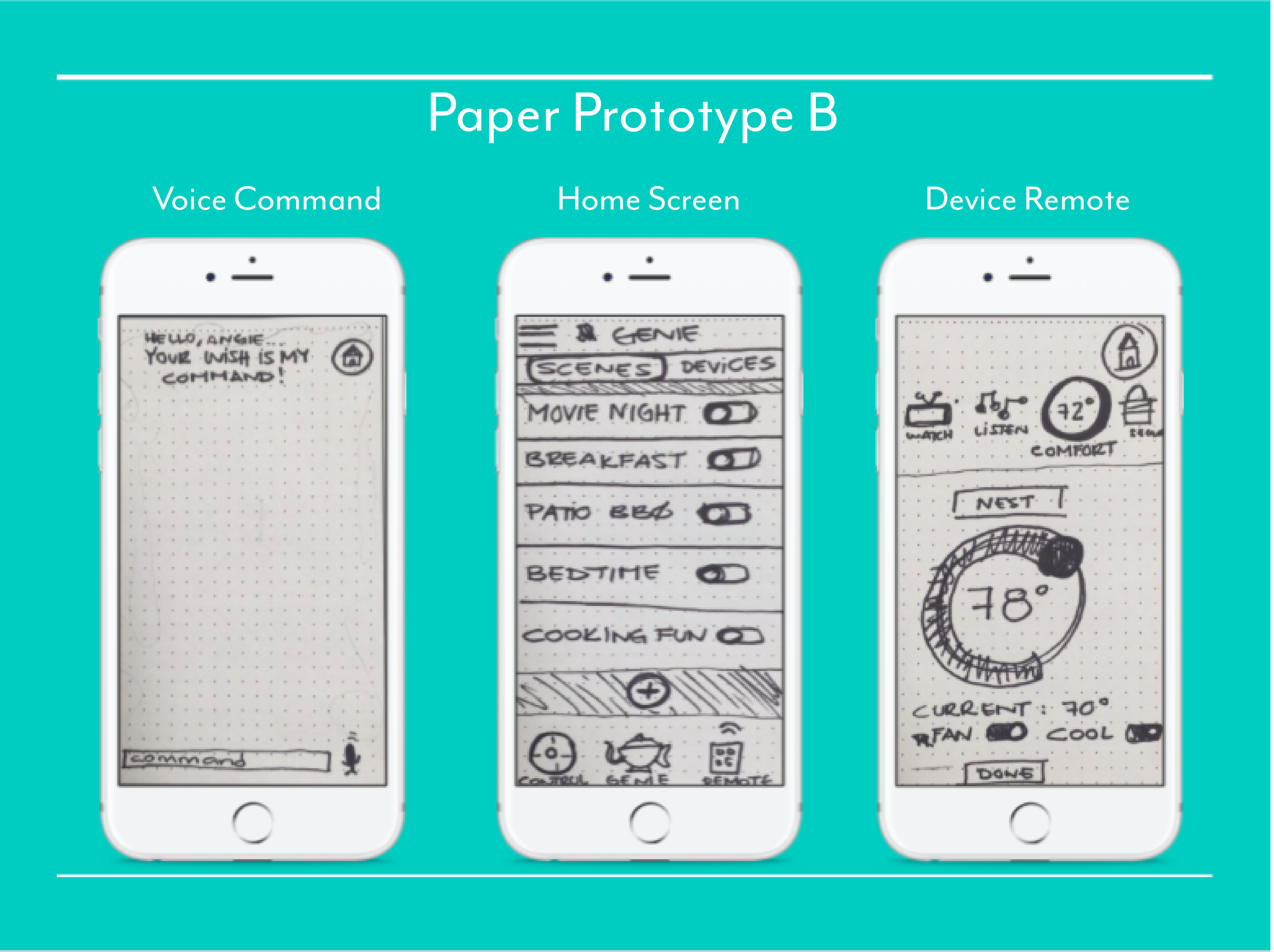
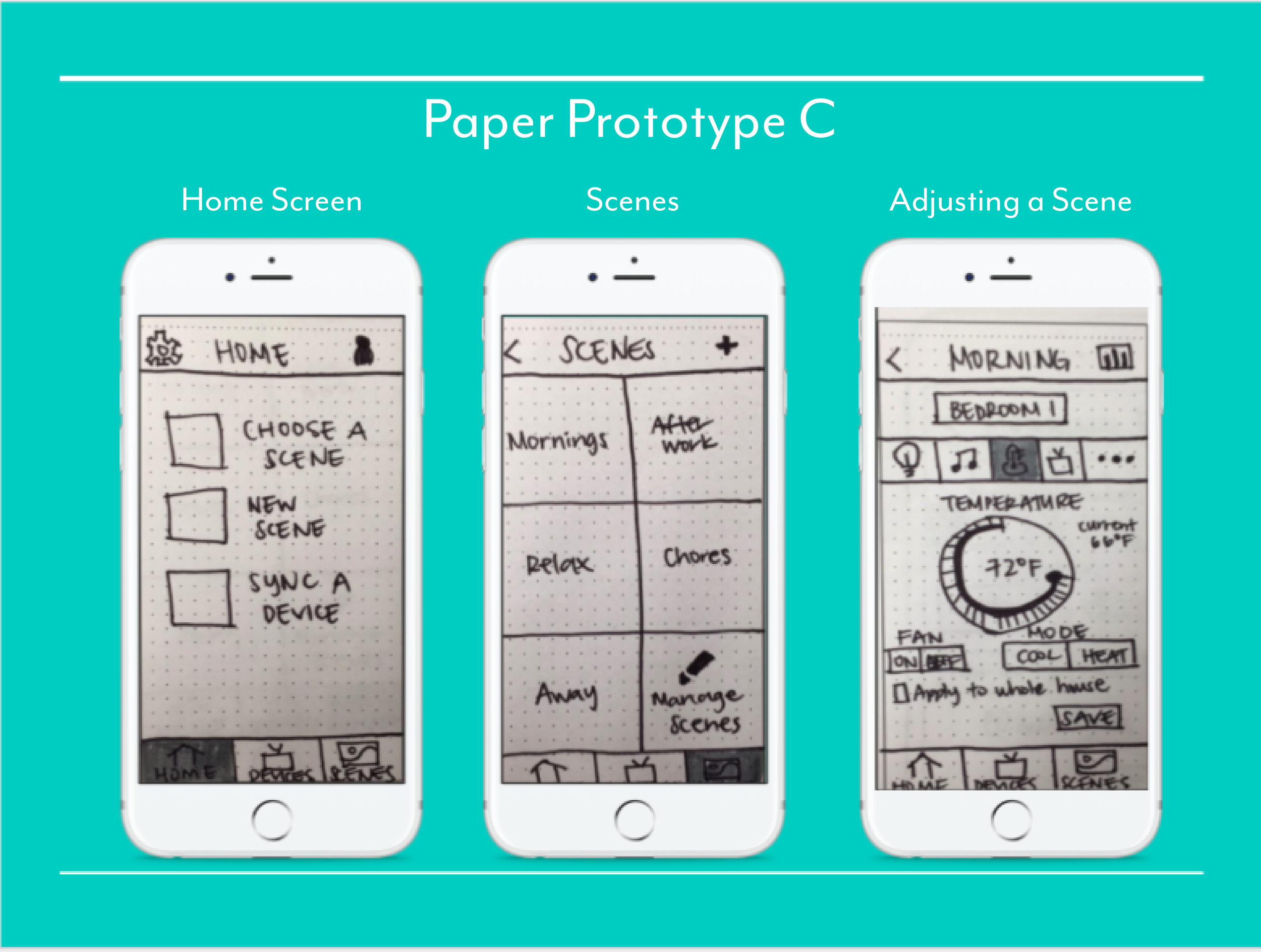
- Paper prototypes
- Style Tiles
- InVision prototype
Client
- DESIGNATION
Role
- UX Designer
- UI Designer
Timeline
- Six Weeks
Background
As the internet of things is becoming an increasingly popular market, applications for these products are becoming more divergent. Our team was tasked with creating an interface that allowed users to control all of their smart home devices from one convenient place.
Research
Competitive Analysis
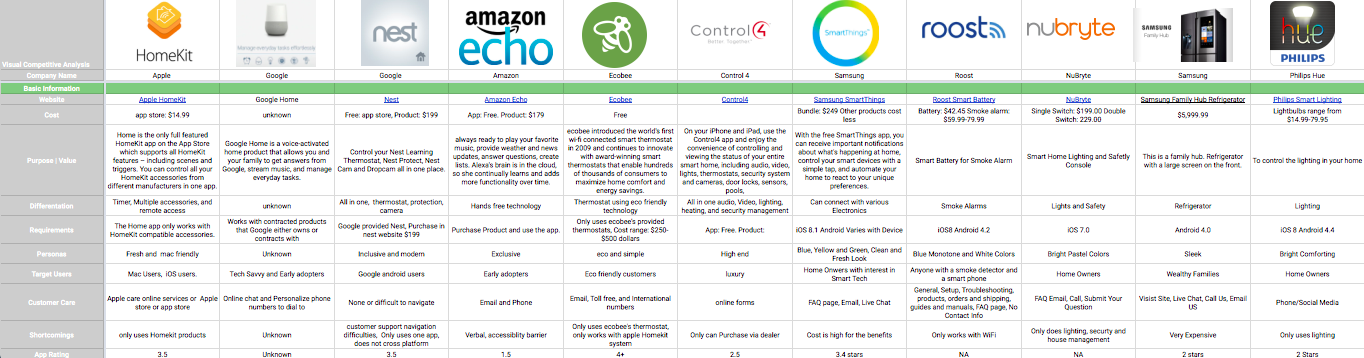
My team and I completed a competitive analysis of other smart home apps and products on the market.
Key Takeaways from Competitive Analysis
- Scattered offerings
- Products with a limited scope
- A steep learning curve
User Research
Main research question:
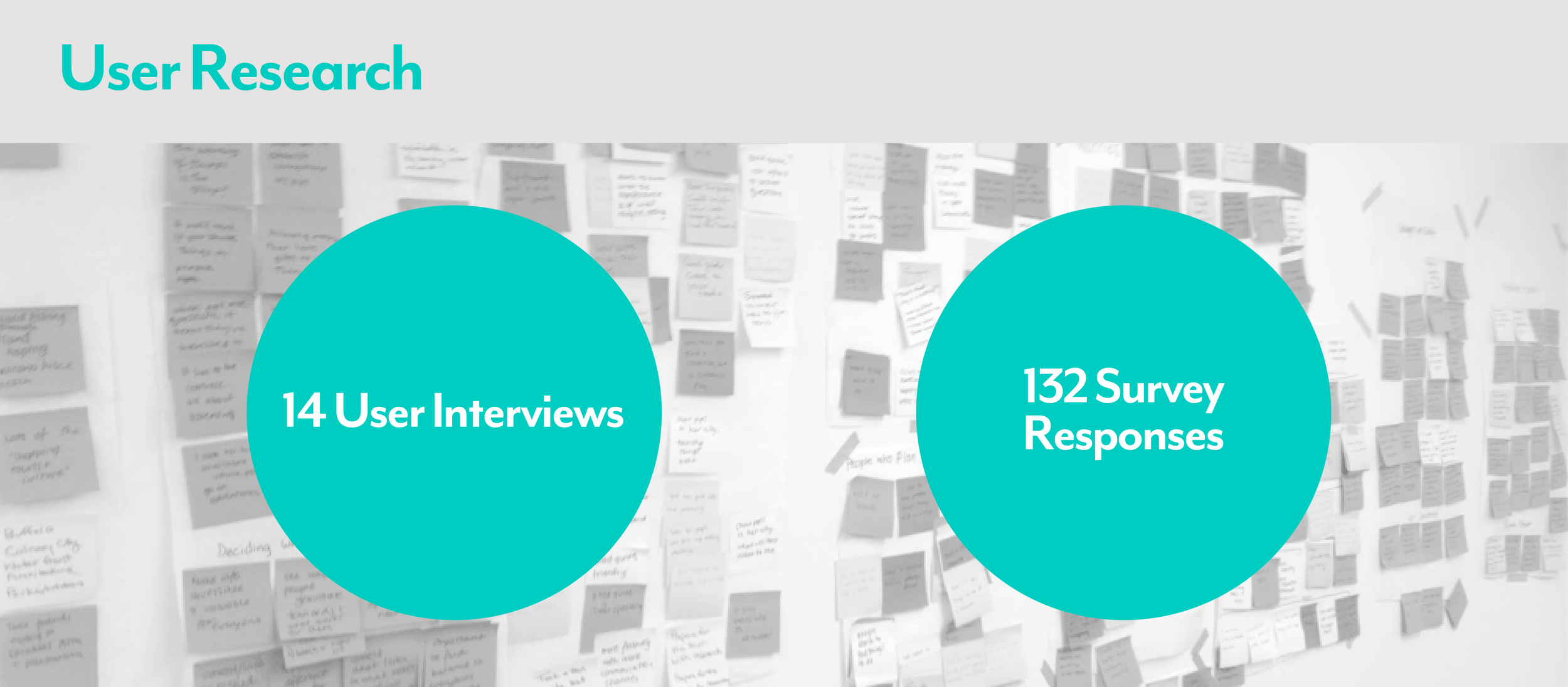
Who are our potential users are and what makes them want to adopt new technology?
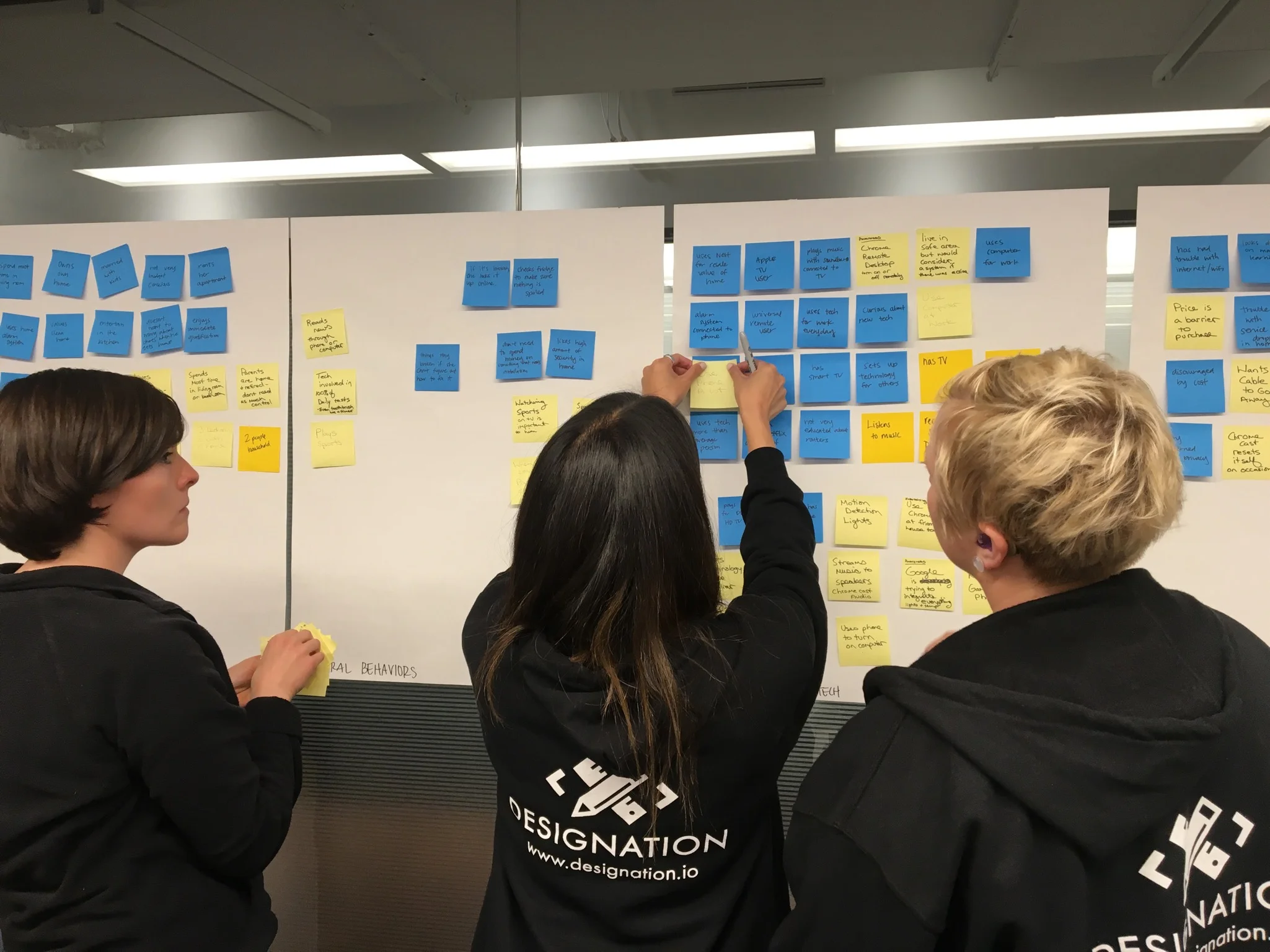
Through interviews, affinity diagramming, and a survey we found that people most likely to adopt this technology:
- Are between the ages of 30-55
- Owned their homes
- Had disposable income
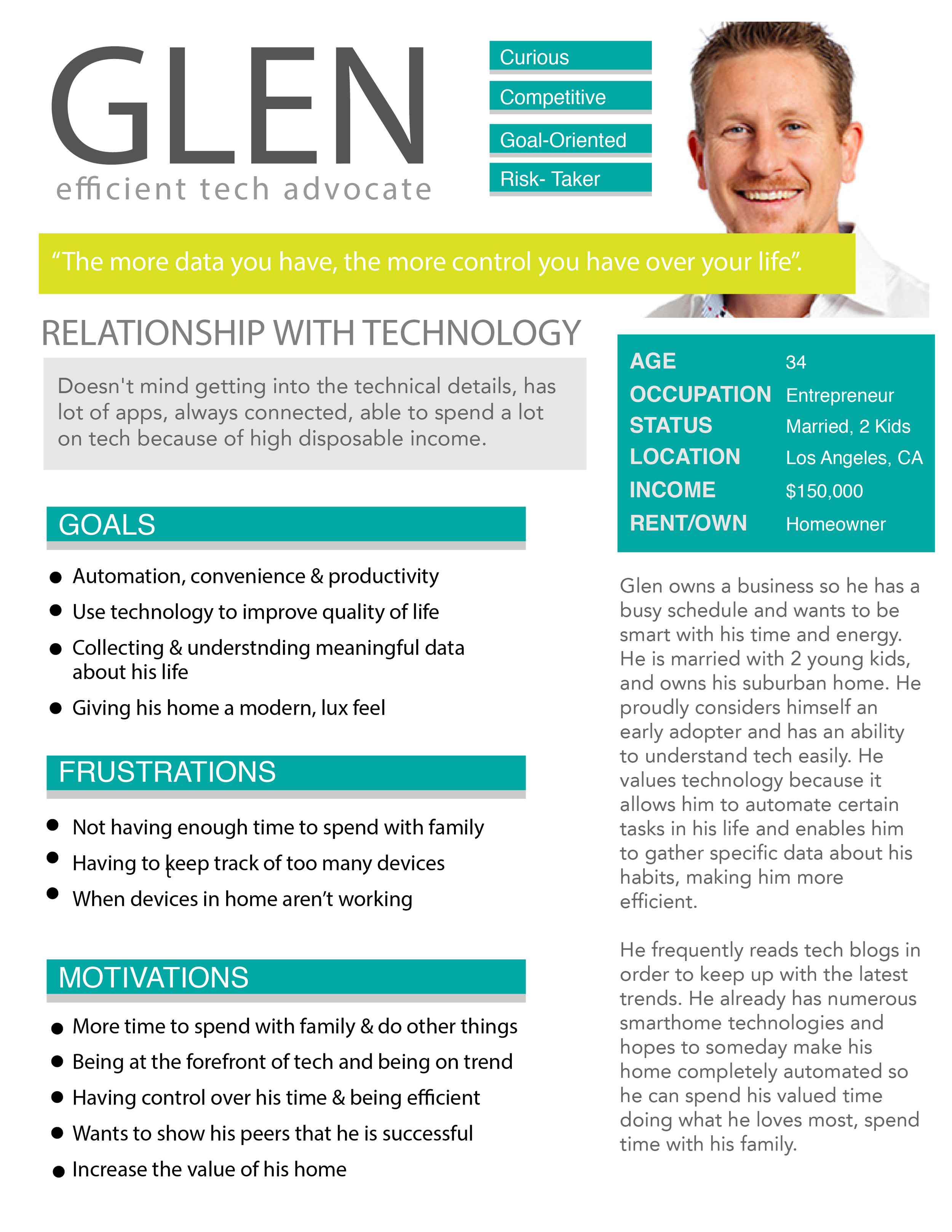
Young families with new homes who are investing in their properties tended to be the most enthusiastic about smart home technologies.
Persona, Problem Statement, and Design Principles
Secondary Persona
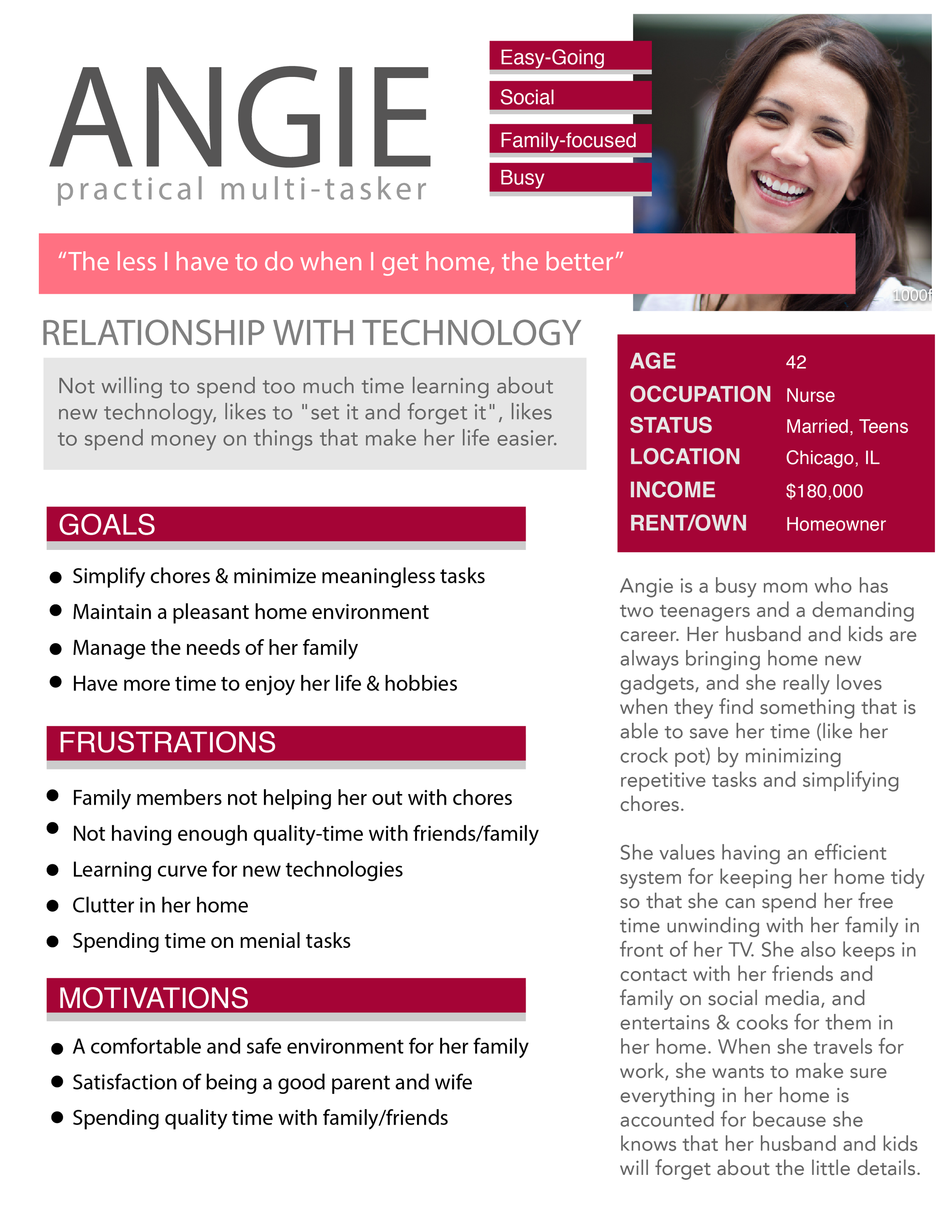
Primary Persona
Problem Statement
Practical multi-taskers need a universal, approachable way to interact with their Smart Home devices because they find the learning curve for multiple platforms discouraging and miss out on useful features since they default to manual control.
Design Principles
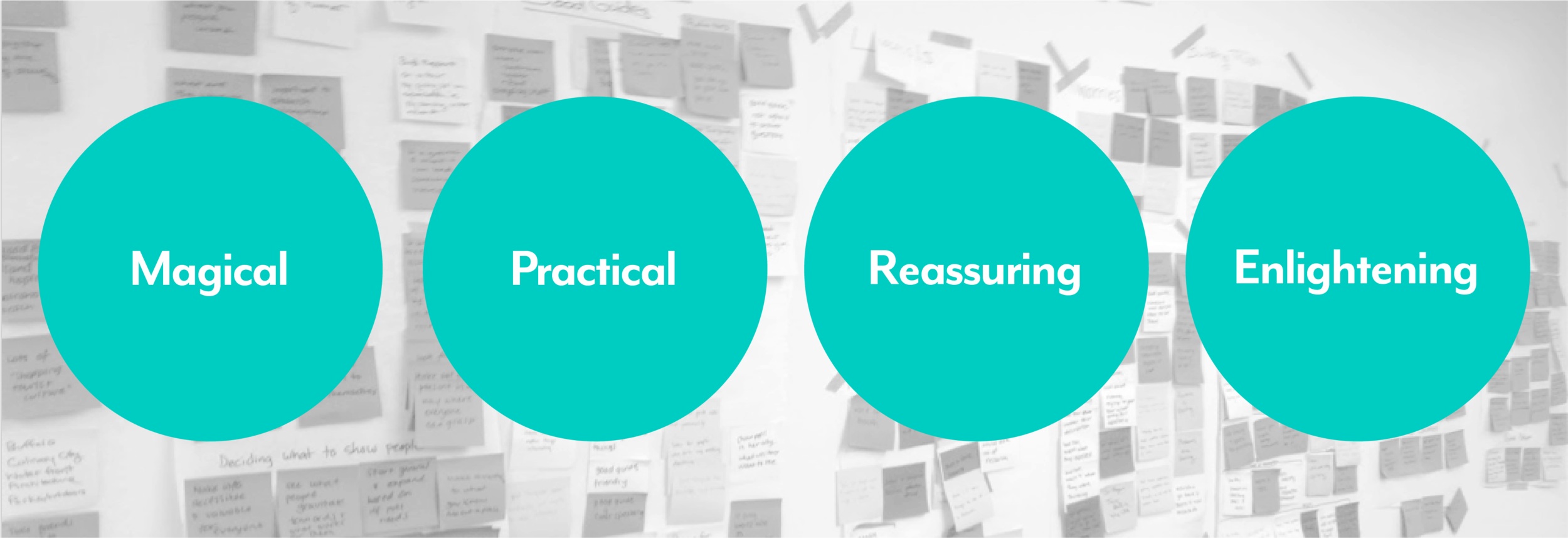
PRACTICAL
Makes it easier to do important everyday tasks.
Features that fit this principle: Scenes
Magical
Delights the user with the illusion of simplicity by keeping the complexities backstage.
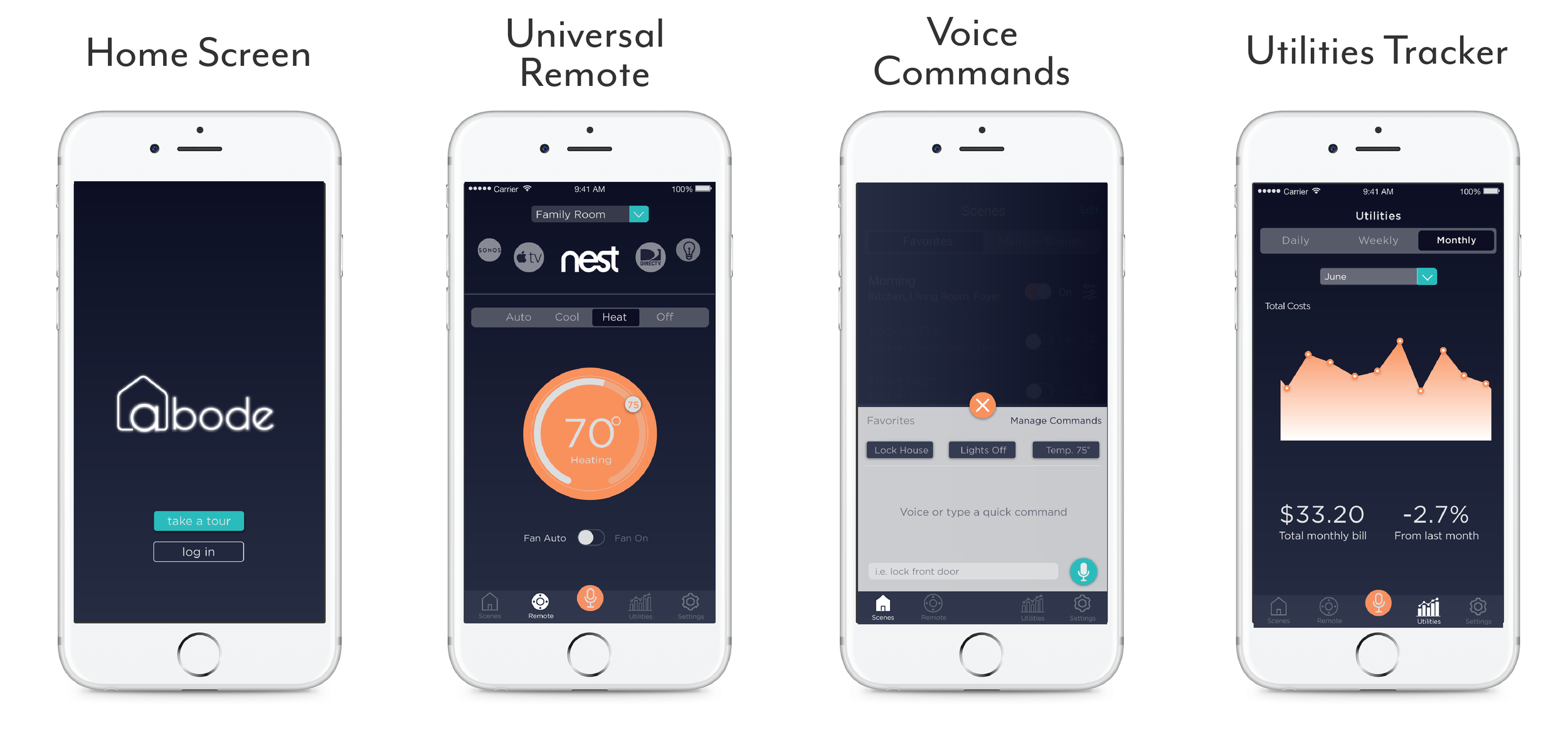
Features that fit this principle: Voice commands, Scenes
Enlightening
Presents information in a welcoming manner to help users learn from their data.
Features that fit this principle: Utilities tracker
REASSURING
Makes users feel smart and capable by providing feedback throughout important interactions.
Features that fit this principle: Onboarding
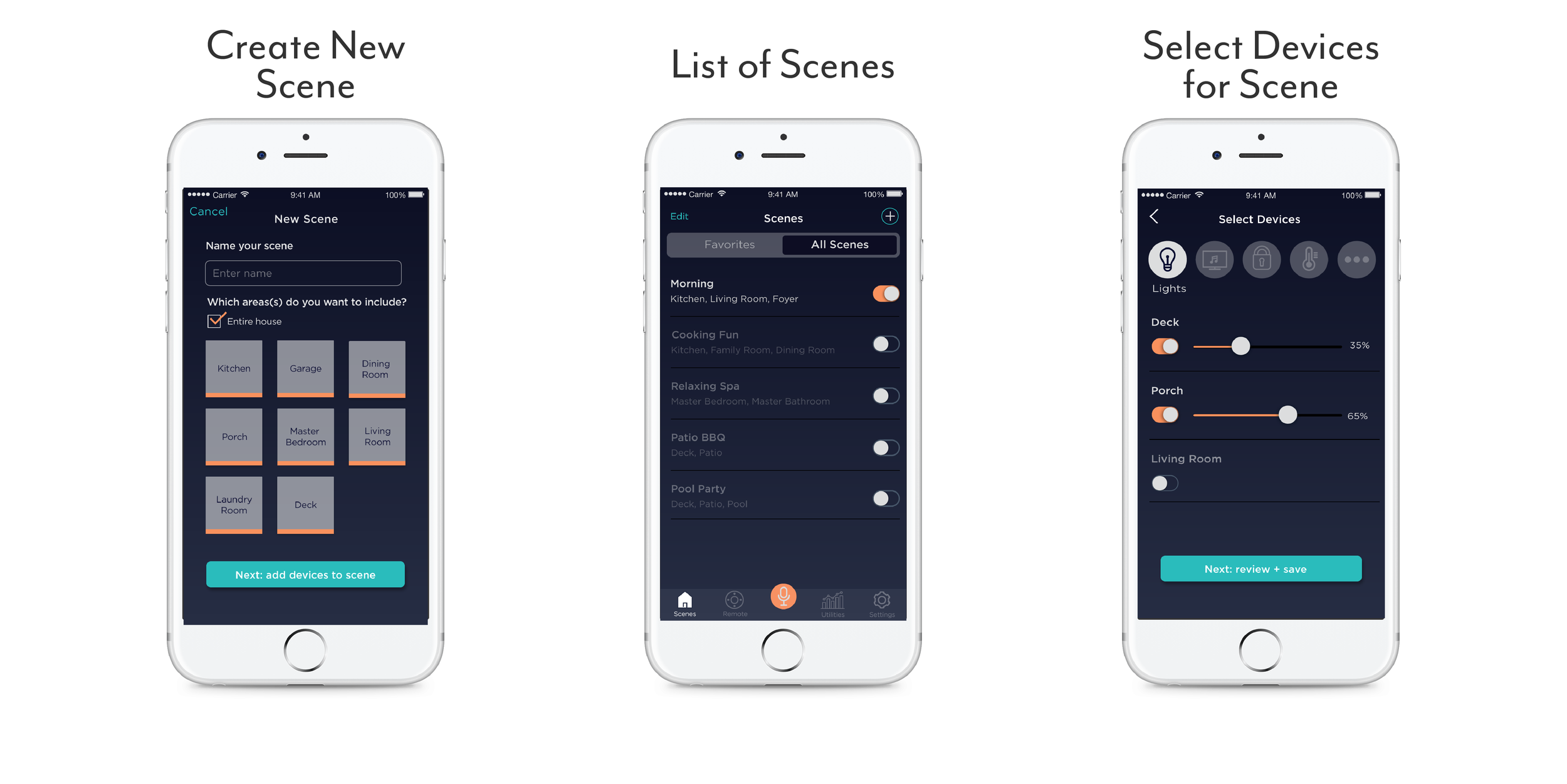
Scenes
Our team realized that whenever we asked users how they spent their time at home, whether doing chores, relaxing, or entertaining, they always seemed to frame their activities around specific rooms.
Through this we came up with idea of scenes. It fit very well with the design principle of making our app magical. With scenes users could program several different smart home devices to activate at the same time. For example a morning scene could include music playing, lights turning on, and a coffee maker programed to start when you wake up.
Prototypes
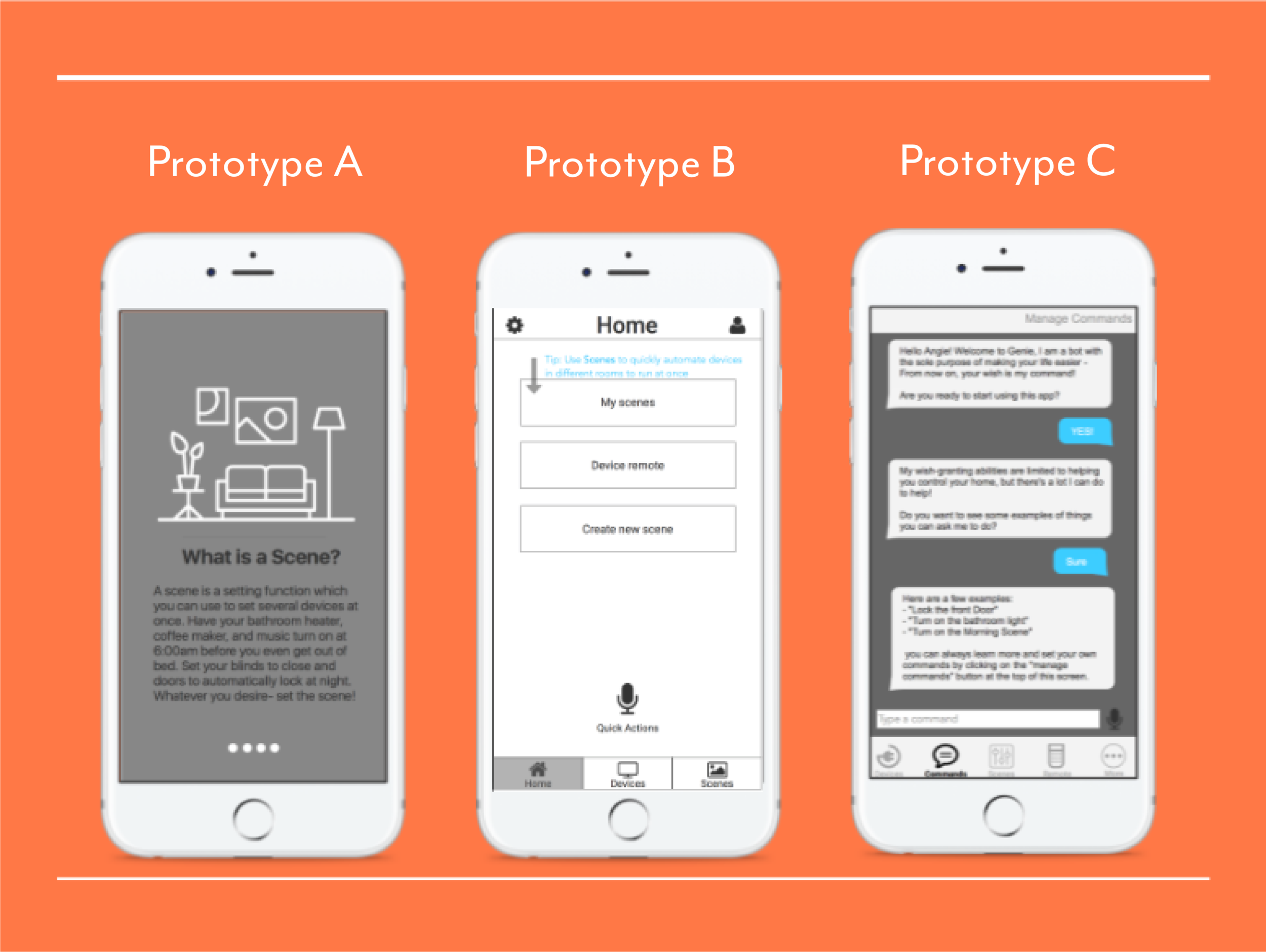
We started with low fidelity paper prototypes and then moved into mid-fidelity Axure prototypes in which we further explored ideas that resonated with our testers and refined our user flows.
Paper Prototypes
Mid-Fidelity Prototypes
Final Prototype
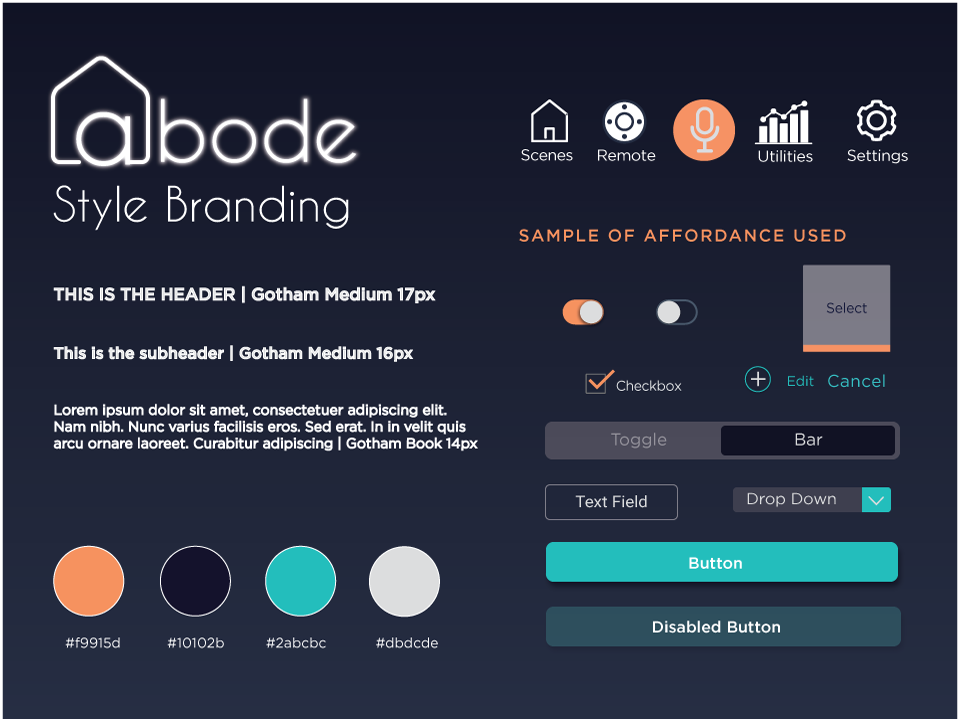
Each member of the group designed a style for the app.
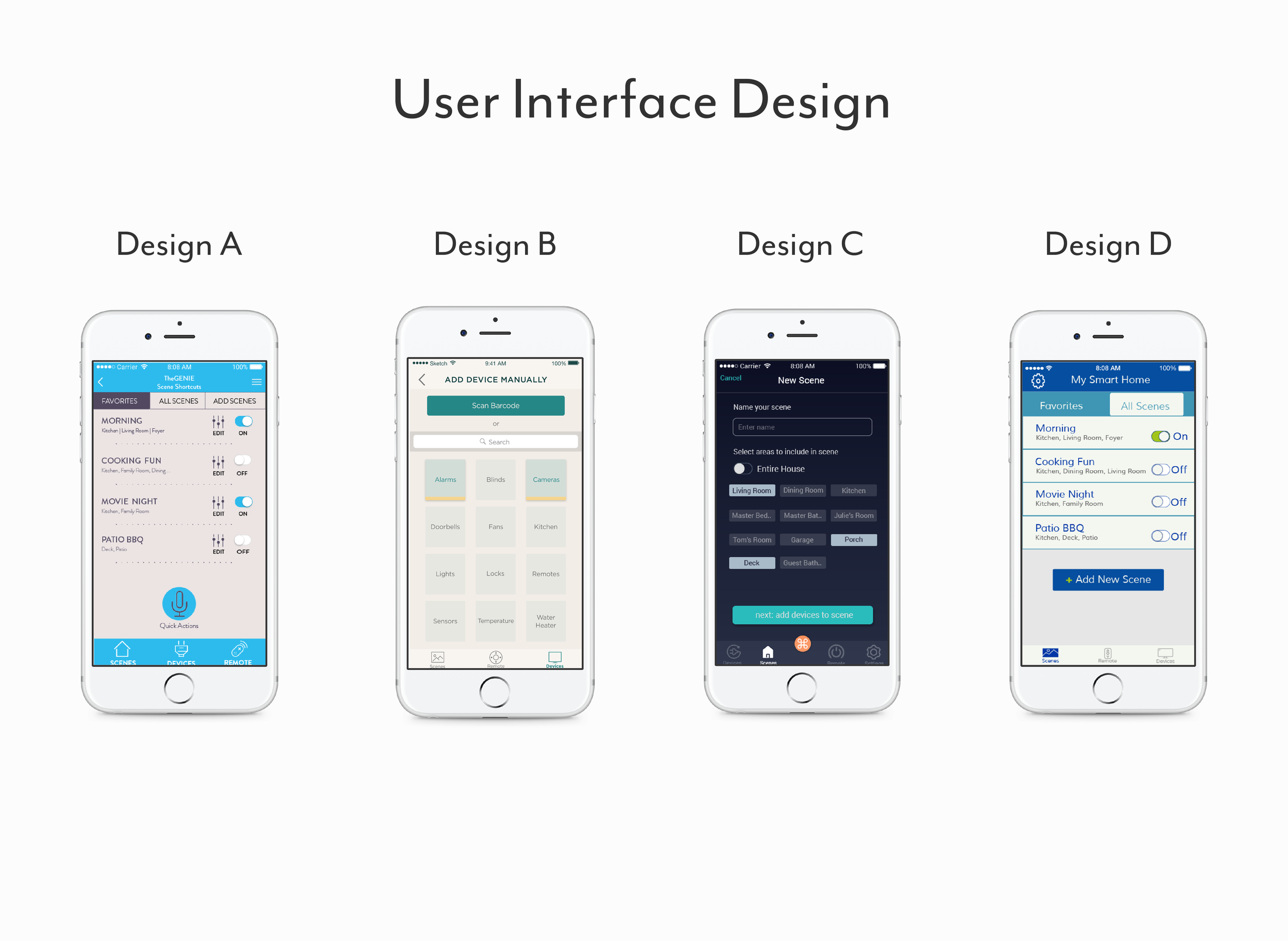
We user tested the four looks and design C received the best feedback from our testers.
Final Prototype
Future Recommendations for Abode
- Develop a day mode
- Test the app in a home environment
- Research how this app could be useful for people with accessibility needs
What We Learned
We learned that people really loved the idea of being able to program multiple devices to run at the same time. In all the users tests we completed, scenes always got a positive and enthusiastic response.
Through this project we learned that people want their home life and home technology made as simple as possible. Convoluted technology that is difficult for the average person will have a hard time succeeding in this space because this technology will be used by a variety of different people-not just the technology savvy. As smart home technology continues to become more popular, it is ever important to keep the user at the center of that design.